.svg)
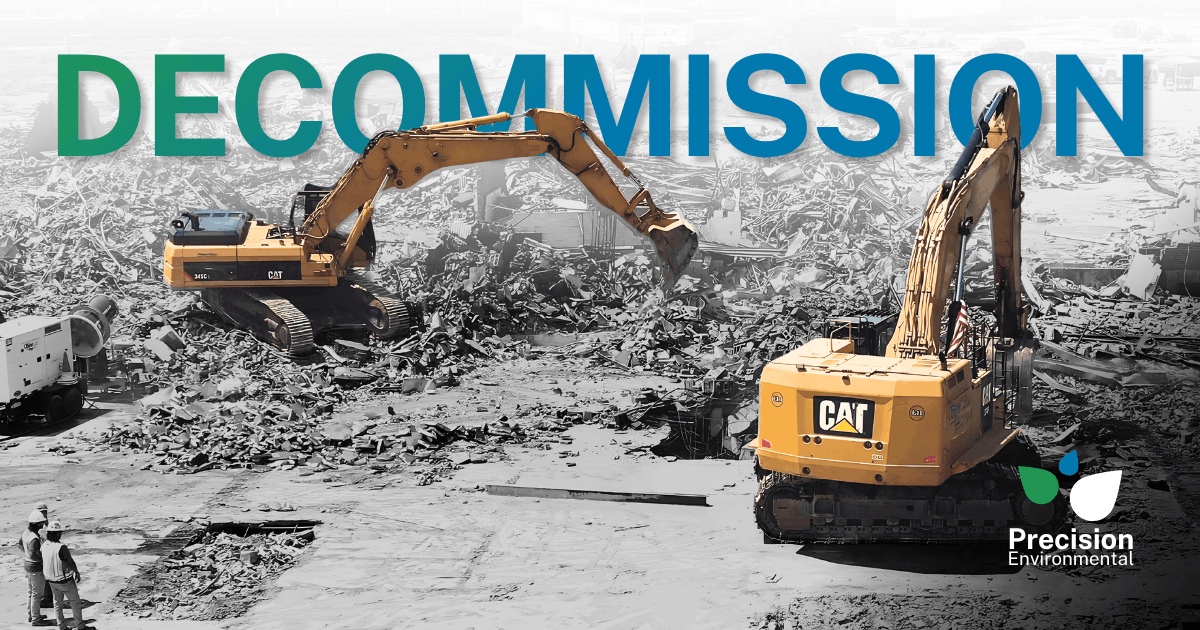
Decommissioning is a critical preparatory phase before any major demolition project. It involves safely shutting down operations, isolating utilities, removing hazardous materials through professional abatement, and preparing the site for efficient structural or selective demolition. In California’s strict regulatory environment, skipping or mishandling this step can lead to costly fines, project delays, health risks, and environmental violations.
Precision Environmental, established in 1982, specializes in fully integrated decommissioning, abatement, and demolition services across California and Arizona. With licensed expertise in asbestos, lead, mold, and hazardous waste handling, plus advanced demolition capabilities, we provide single-contractor accountability that streamlines timelines, reduces risks, and ensures full compliance.
This guide covers everything property owners, developers, facility managers, and public agencies need to know about decommissioning with integrated abatement and demolition in 2026.
What Is Decommissioning in the Context of Demolition?
Decommissioning is the systematic process of safely retiring a building, facility, or site from active use. Unlike demolition (the physical takedown), decommissioning focuses on preparation:
- Utility isolation and disconnection (electrical, gas, water, HVAC).
- Removal of equipment, chemicals, and contents.
- Comprehensive hazardous materials survey and abatement.
- Waste characterization and proper disposal.
- Site stabilization before demolition begins.
When integrated with abatement and demolition, it creates a seamless workflow: Decommissioning first → Abatement → Demolition → Debris management and site clearance.
Why Integrated Decommissioning, Abatement, and Demolition Matters
Hiring separate contractors for each phase often leads to coordination issues, duplicated efforts, and compliance gaps. An integrated approach offers:
- Single-Point Accountability: One licensed team handles everything from survey to final clearance.
- Regulatory Compliance: Full adherence to Cal/OSHA, South Coast AQMD, DTSC, EPA, and local requirements.
- Cost and Time Savings: Reduced mobilization, overlapping schedules, and minimized downtime.
- Enhanced Safety: Continuous containment, air monitoring, and trained crews throughout the project.
- Sustainability: Higher recycling rates and CALGreen compliance.
Recent projects, such as the City of Eastvale (8 structures), Laguna Beach dental building, Ventura County lead abatement, DSH-Patton recycling of 14 structures, Los Angeles County Development Authority Abatement & Restoration, and Orange County Health Authority (35+ tons of asbestos), demonstrate the effectiveness of this model.
Step-by-Step Integrated Decommissioning Process
- Pre-Decommissioning Assessment - Conduct a thorough hazardous materials survey (destructive sampling for asbestos, lead-based paint, PCBs, mercury, mold, etc.) and utility mapping. Learn more about our Environmental Abatement services.
- Utility Isolation and System Shutdown -Safely disconnect and cap all utilities while maintaining containment.
- Hazardous Materials Abatement - Professional removal of asbestos, lead, mold, and other contaminants using negative air pressure, wet methods, HEPA filtration, and strict PPE protocols. Includes air monitoring and independent clearance testing.
- Selective or Structural Demolition Preparation - After clearance, proceed with controlled demolition using appropriate equipment (high-reach excavators, robotics for sensitive areas). Explore our full range of Demolition Services.
- Debris Management and Recycling - Sort, recycle, and dispose of materials responsibly — targeting 80-90% diversion rates.
- Site Clearance and Soil Remediation - Final grading, soil testing/remediation if needed, and documentation for redevelopment.
Key Regulations in California (2026)
- Cal/OSHA §1529: Asbestos worker protection.
- South Coast AQMD Rule 1403: Demolition and renovation emission controls.
- DTSC & EPA: Hazardous waste transportation, lead-safe practices, and site remediation.
- CSLB Licensing: C-22 (Asbestos), HAZ classifications, and more.
- CALGreen: Sustainability and waste diversion requirements.
Non-compliance risks include stop-work orders and fines up to $25,000 per day.
Selective vs. Structural Demolition After Decommissioning
- Selective Demolition: Targeted removal of specific components while preserving others — ideal for renovations or partial redevelopment.
- Structural Demolition: Complete building takedown — suited for full site clearance and new construction.
Integrated abatement ensures both approaches are safe and compliant. Read our guide on Structural Demolition in 2026 for more details.
Benefits for Different Clients
- Government & Public Works: Proven track record with cities like Eastvale, Los Angeles County, Laguna Beach, and Alhambra.
- Healthcare Facilities: Infection control and sensitive abatement (e.g., CalOptima, Ventura County) California Department of State Hospitals (DSH).
- Commercial & Industrial: Efficient turnaround for redevelopment.
- Multifamily & Developers: Minimized tenant disruption and faster project completion.
Common Hazardous Materials Handled
- Asbestos (insulation, flooring, roofing).
- Lead-based paint and pipes.
- Mold and biological contaminants.
- PCBs, mercury, and other regulated substances.
Cost Factors and ROI
Costs vary by building size, contamination level, location, and scope. Integrated services typically save 15-30% compared to multiple vendors by eliminating redundancies and delays.
Why Choose Precision Environmental?
- 40+ years of experience.
- Full suite of CSLB licenses and certifications.
- 24/7 emergency response.
- Commitment to safety, sustainability, and client satisfaction.
Contact us today for a site assessment.
FAQs
How long does a decommissioning + abatement + demolition project take? - Timelines depend on scope but integrated services significantly accelerate the process compared to fragmented approaches.
What makes integrated services better than separate contractors? - Single responsibility, better coordination, lower risk of compliance gaps, and overall cost efficiency.
Do you handle government and healthcare projects? - Yes — we are a trusted partner for public agencies, healthcare authorities, and large-scale redevelopment. See our recent project awards.
Is soil remediation included? - Yes, as the final step when contamination is present.
Conclusion
Effective decommissioning with integrated abatement and demolition is the foundation of safe, compliant, and efficient redevelopment in California. By addressing hazardous materials early and handling the entire process under one roof, projects stay on schedule, within budget, and fully protective of workers, the community, and the environment.
For expert decommissioning, abatement, and demolition services in California or Arizona, contact Precision Environmental today at 800-375-7786 for a complimentary site assessment and 24/7 support.